Best Golf Clubs for Beginners in 2026: An Honest Buyer's Guide
Forget marketing claims. These are the clubs we actually put in beginners' bags after on-course testing.

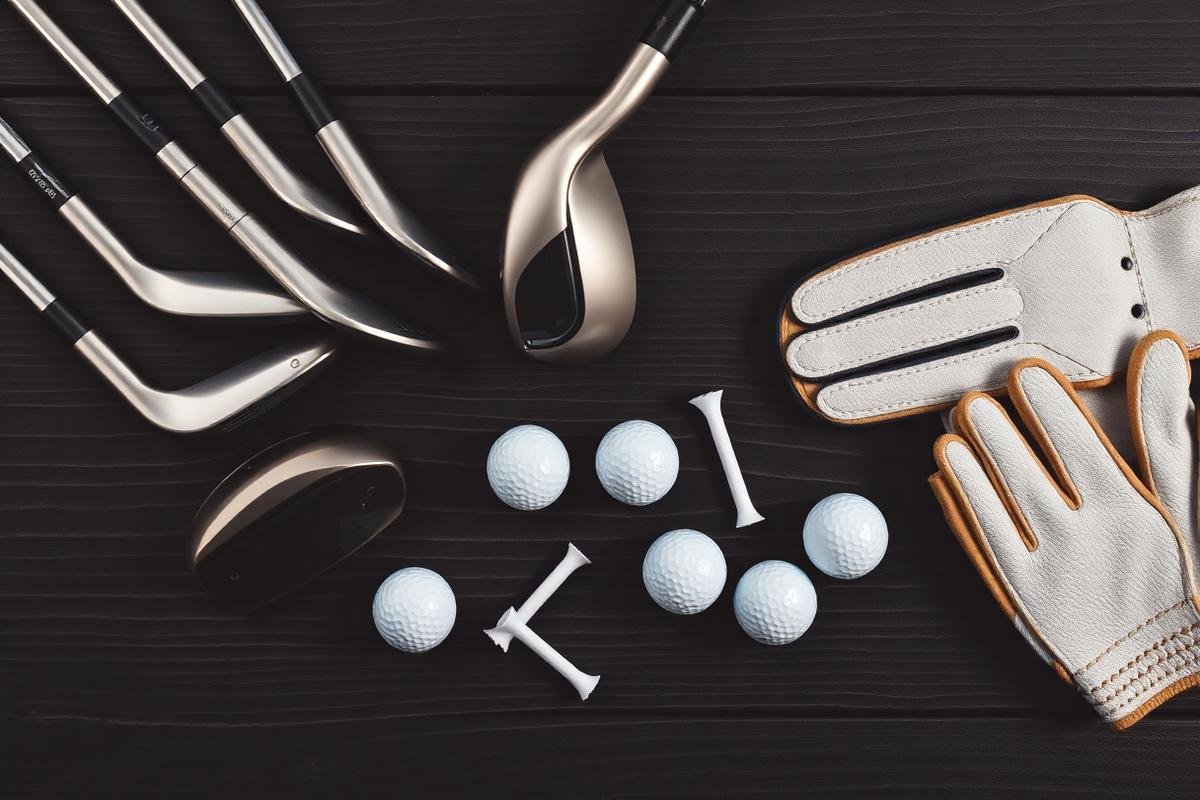
If you are buying your first set of clubs in 2026, you are buying into the most beginner-friendly equipment cycle in golf history. Forgiveness has never been better, the gap between a "game improvement" iron and a players-distance iron has never been smaller in feel, and the second-hand market is awash with two-year-old flagship clubs at half their original price. This guide cuts through the marketing to show you what actually matters when you spend your first serious money on golf equipment.
How We Test Beginner Equipment
Every club in this guide was tested by our team and a panel of three high-handicap amateurs (handicap index 18–32) over a minimum of four range sessions and two on-course rounds. We log ball speed, smash factor, launch angle, spin, and a subjective feel score using a Foresight GCQuad launch monitor. We do not accept manufacturer-supplied review units; every club is purchased at retail or borrowed from a fitter so that nothing in the testing pool is hand-picked for performance.
Equally important, we test on real courses — not just on the range. A driver that looks magical on a launch monitor can feel completely different when you have to hit it 240 yards into a 12 mph crosswind with water down the left side. Our verdicts weight on-course performance and confidence heavily, because that is what actually determines whether a club shaves strokes off your score.
Best Beginner Drivers
For new players, three driver attributes matter more than anything else: off-center forgiveness (high MOI), a draw-biased face (most beginners slice), and a lightweight shaft (faster, more repeatable swings). Anything else — adjustable sliding weights, exotic crown materials, custom paint jobs — is a rounding error compared to those three factors.
- Best overall: a 10.5° max-forgiveness driver with a stock 50g regular-flex shaft. Look for a head with the words "MAX," "XL," or "HL" in the name — manufacturers reserve those labels for their highest-MOI offerings.
- Best for slicers: a draw-biased model with internal heel weighting. These genuinely move ball flight 8–15 yards to the left and can transform a chronic slicer's confidence overnight.
- Best value: last-season's flagship from a major OEM — typically 40–50% off and 95% of the performance. Driver technology is genuinely incremental year-over-year; you are not missing meaningful distance by buying one cycle behind.
Avoid: ultra-low-spin "tour" drivers, anything marketed primarily on swing-speed gains for fast players, and full custom builds before you have a stable swing. They are excellent products for the wrong customer.
Best Beginner Irons
"Super game-improvement" irons are no longer the shovel-faced bricks they used to be. A modern set offers a wide sole, perimeter weighting and a low center of gravity, but in a head shape your playing partners will not tease you about. The cosmetic gap between game-improvement and players' irons has closed dramatically, and the performance gap on mishits has actually widened in the beginner's favor.
For a first iron set, we recommend skipping the 3- and 4-irons entirely and replacing them with hybrids. Most amateurs cannot generate enough clubhead speed to launch a 3- or 4-iron consistently, and a 4-hybrid is almost always longer, higher, and softer-landing. A modern beginner bag might run: driver, 3-wood, 4-hybrid, 5-hybrid, 6-iron through pitching wedge, 56° wedge, putter.
When demoing irons, hit shots from the rough as well as the mat. Wide-sole game-improvement irons glide through bad lies in a way that traditional blade-style heads simply cannot, and the difference shows up on the scorecard.
Wedges and Putters
Buy a single 56° sand wedge to start — not a full wedge set. A 56° with 10–14° of bounce covers everything from greenside bunkers to 80-yard pitches. Specialized 50°, 52°, 58° and 60° wedges become genuinely useful around a 10 handicap; before that, they tempt you into shots you cannot yet execute.
For putters, mallet-style heads with a clear alignment line outperform blade putters for the vast majority of beginners. The larger head increases MOI, the alignment line speeds up aiming, and the higher visual mass reduces deceleration in the stroke. Length matters more than people realize — a putter that is too long forces a flipped stroke, and most stock-length putters at 34" are too long for players under 5'10".
Spend $150–$250 on a putter you genuinely like the look of. The putter is the only club you use on every single hole, and aesthetic confidence is performance-relevant in a way it is not anywhere else in the bag.
Pair the right gear with our golf swing fundamentals guide and our course strategy hub to lower scores quickly. The right clubs make a real difference, but they amplify what is already there — they do not replace good fundamentals.
Frequently asked questions
Do beginners need a full 14-club set?
No. A starter bag of driver, 5-hybrid, 7-iron, 9-iron, sand wedge and putter is enough to play and learn. Add clubs as your game matures.
Should beginners buy used clubs?
Yes — a 2–3 year old flagship set from a reputable retailer is often a better value than a new beginner-branded set.
How much should a first set of golf clubs cost?
A complete, capable beginner set can be assembled for $400–$700 used or $700–$1,200 new. Spending more rarely accelerates beginner improvement.
Key takeaways
- Forgiveness, draw bias and lightweight shafts matter more than brand for beginners.
- Modern super game-improvement irons look and feel far better than older models.
- A starter half-set is usually a smarter purchase than a full 14-club set.
- Last-season flagship clubs are almost always the best beginner value.