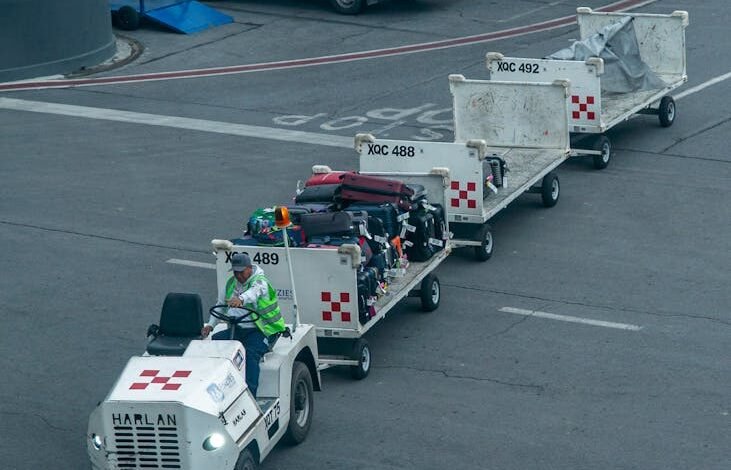
The Role of AI in Logistics: Lessons from Kansai Airport’s Unmatched Baggage Handling Record
Estimated reading time: 5 minutes
- AI innovations can optimize logistics operations.
- Kansai Airport’s success illustrates effective AI integration.
- Automated systems reduce human error and improve efficiency.
- Predictive analytics enhances resource allocation.
- Customer experience can be improved with AI-driven applications.
Unpacking the AI-Driven Logistics Success at Kansai Airport
Automated Baggage Handling Systems
Predictive Analytics for Demand Management
Enhanced Customer Experience through Smart Tracking Apps
AI Technologies Driving Change in Logistics
Harnessing the Power of AI for Enhanced Business Operations
The Future of AI in Business Operations
Conclusion: Start Your AI Journey with AI TechScope
FAQ
Unpacking the AI-Driven Logistics Success at Kansai Airport
Kansai Airport’s ability to manage and safeguard luggage is not merely a stroke of luck; it is a product of strategic enhancements and innovative technological implementation. The comprehensive systems in place at Kansai integrate AI across various operational processes, including baggage tracking and management. Here’s how this seamless integration works and what lessons business leaders can learn from it:
1. Automated Baggage Handling Systems
At the heart of Kansai Airport’s success is its advanced baggage handling system, which employs AI to efficiently track and manage luggage throughout the airport. Through a sophisticated network of automated conveyor belts, scanners, and tracking systems, every piece of baggage is monitored at every stage of the journey from check-in to the airplane hold.
Practical Takeaway for Businesses: Implementing automated systems that utilize AI can significantly reduce human error and improve operational efficiency. Businesses can look to AI-powered logistics management tools that provide real-time tracking and inventory management, thereby enhancing customer service and trust.
2. Predictive Analytics for Demand Management
Kansai Airport also employs predictive analytics to forecast passenger numbers, thereby optimizing its baggage handling capacities. By analyzing historical data, seasonal trends, and real-time flight information, the airport can allocate resources efficiently, ensuring that the system is prepared for peak times.
Practical Takeaway for Businesses: Embracing AI-driven analytics can empower businesses to anticipate demand spikes and optimize resource allocation. Utilizing platforms that incorporate predictive analytics enables businesses to adapt quickly to changing market conditions, thus enhancing overall efficiency and improving customer satisfaction.
3. Enhanced Customer Experience through Smart Tracking Apps
The adoption of AI isn’t limited to behind-the-scenes operations; it also extends to improving customer experience. Kansai Airport offers passengers mobile applications powered by AI that allow them to track their luggage in real-time, receive notifications on travel status, and even access support services seamlessly.
Practical Takeaway for Businesses: Building AI-driven applications that enhance the customer experience can set your company apart in competitive markets. Solutions that enable real-time updates and customer interaction can enhance customer loyalty and streamline communication.
AI Technologies Driving Change in Logistics
While Kansai Airport sets a benchmark for efficiency through the integration of AI, various technologies are reshaping logistics on a broader scale. Here are some other notable advancements:
1. Robotics and Automation
The logistics sector is witnessing the rise of robots and automated systems in warehousing and delivery. From autonomous delivery vehicles to robotic arms in warehouses, automation aids in speeding up operations and reducing labor costs.
2. Internet of Things (IoT)
The integration of IoT devices allows for real-time tracking of shipments, ensuring higher visibility and transparency in logistics. Sensors can monitor cargo conditions, and RFID tags can provide precise location data.
3. Machine Learning and Data Analysis
Machine learning techniques are enabling rigorous analysis of vast datasets to improve route optimization and predictive maintenance. By learning from past data, AI can provide insights into the best logistics strategies tailored to specific business needs.
Harnessing the Power of AI for Enhanced Business Operations
Given the compelling evidence of AI’s potential demonstrated by Kansai Airport and the broader logistics industry, it’s crucial for business professionals and entrepreneurs to consider how these technologies can be integrated into their operations.
Embracing AI Automation
AI TechScope positions itself as a leader in helping businesses make this transformative leap. Through our expertise in n8n automation and AI consulting, we provide tailored solutions that optimize workflows and enhance productivity. Whether it’s automating repetitive tasks or developing sophisticated AI-driven applications, we guide businesses in leveraging these advancements for maximum impact.
Workflow Optimization Services
Our comprehensive approach to AI automation includes workflow optimization services that streamline processes across various business operations. By identifying bottlenecks and implementing intelligent automation solutions, businesses can achieve significant time and cost savings, mimicking the operational efficiency showcased by Kansai Airport.
Custom Integration of AI Technologies
AI TechScope understands that each business has distinct needs. We specialize in implementing customized AI solutions that align with your organizational goals and ensure that you remain competitive in today’s fast-paced market.
The Future of AI in Business Operations
As AI technology continues to evolve, the implications for logistics and other sectors are profound. The potential to enhance efficiency, reduce costs, and improve customer experiences is unparalleled. However, the integration of AI should be approached strategically, considering the specific needs of your operations and workforce.
Incorporating AI-driven strategies is not merely a technological shift but a cultural one. It requires a commitment to continuous improvement and adaptability, traits that successful businesses must cultivate to thrive in the digital age.
Conclusion: Start Your AI Journey with AI TechScope
Kansai Airport’s success in baggage handling underlines the importance of integrating AI into operational strategies. As companies strive for excellence, leveraging tools and systems that embrace AI is essential for achieving lasting efficiency and customer satisfaction.
At AI TechScope, we’re dedicated to empowering businesses to harness the full potential of AI automation and consulting services. Whether you’re looking to optimize workflows, improve customer interactions, or develop tailored AI solutions, our team of experts is here to help you navigate these transformative technologies.
Ready to enhance your business operations with AI automation? Explore our range of services at AI TechScope and let’s embark on this journey towards efficiency and innovation together!
FAQ
1. How has AI improved operations at Kansai Airport?
AI has improved operations at Kansai Airport through automated baggage handling systems, predictive analytics for demand management, and enhanced customer experiences with smart tracking applications.
2. What are some key benefits of AI in logistics?
Key benefits include reduced human error, improved operational efficiency, enhanced customer service, and the ability to efficiently allocate resources based on predictive analytics.
3. How can businesses start integrating AI technologies?
Businesses can start integrating AI technologies by implementing automated systems, utilizing predictive analytics platforms, and developing AI-driven applications to enhance customer interactions.